Fish in the Bay – July Aug 2025, Bair Island = Mystery Island.

Bair Island, a restored marshland off the shores of Redwood City and San Carlos, is the latest new area we surveyed under WRMP commission.
A note of caution: This place presented a special challenge. We were confronted with several species of weird animals we had never seen before, plus a few that we had seen, but never so many of them in one place. For that reason, some of the results reported here are still a work in progress as we sort out creature identifications. In many ways, Bair Island is a new world for us.
A little bit of history:
- Levee Breach Celebrates Wetland Restoration … (2016) https://sfbayws.org/2016/01/18/levee-breach-celebrates-wetland-restoration-san-francisco-bay/
- “Bair Island got its name in the 1920s from Fred Bair, who owned a home and raised cattle on the land.
- – In the 1940s, the Leslie Salt company acquired the property and built levees for salt-making that divided it into three sections: Outer, Middle and Inner Bair Island.
- – In 1973, the land was again sold, to Mobil Oil, which began a large-scale development plan for the area. In response, the Friends of Redwood City and the Citizens Committee to Complete the Refuge, together with organizations like the Audubon Society and Save the Bay, mobilized opposition.
- – Eventually, they found a buyer for the land in the conservation community: the Peninsula Open Space Trust, which, in 1999, turned the three sections of the island over to the U.S. Fish & Wildlife Service and the CA Department of Fish and Wildlife.”
- Decades-long Bair Island Restoration Project comes to fruition. (2015) https://sfbayws.org/2015/12/11/decades-long-bair-island-restoration-project-comes-fruition/
“In 1982, a referendum by Redwood City citizens, called Measure O and led by Ralph and Carolyn Nobles, passed by 42 votes out of almost 18,000 cast and reversed that housing development plan.”

Results from the first fish & bug monitoring survey in July:
- Most fishes aside from Anchovies, were caught in the deep channel of Redwood Creek.

Results from the second fish & bug monitoring survey in August.
- Once again, most fishes and Crangon Shrimp were caught in, or near, deep Redwood Creek.
- Most of the “unidentified snails” from July are now identified as ‘Japanese Bubble Snail.’
- New species: Two new arthropods were observed: Hilgendorf’s Seaspider and an unidentified isopod. We encountered at least one new colonial tunicate species and two sponges (yellow and red). One Mya Clam was positively identified.
Even a week after the August set of Bair Island trawls, we are still scouring the photos for creatures that may not have been counted or correctly identified.
1. Bair Island Landmarks & Scenery.

Bair Island is an interesting marsh in the middle of an urban/suburban landscape. It is surrounded by corporate high-rise offices, residential neighborhoods, a municipal airport, and an active seaport.
- Pacific Shores Center: https://en.wikipedia.org/wiki/Pacific_Shores_Center
- Google to lease out offices in Redwood City: https://therealdeal.com/san-francisco/2025/04/09/google-to-lease-out-413k-sf-of-offices-in-redwood-city/
“Google bought the bulk of the 106-acre Pacific Shores development in 2014 for an undisclosed sum, then occupied six buildings containing 934,000 square feet.” - San Carlos Airport: https://www.smcgov.org/publicworks/san-carlos-airport
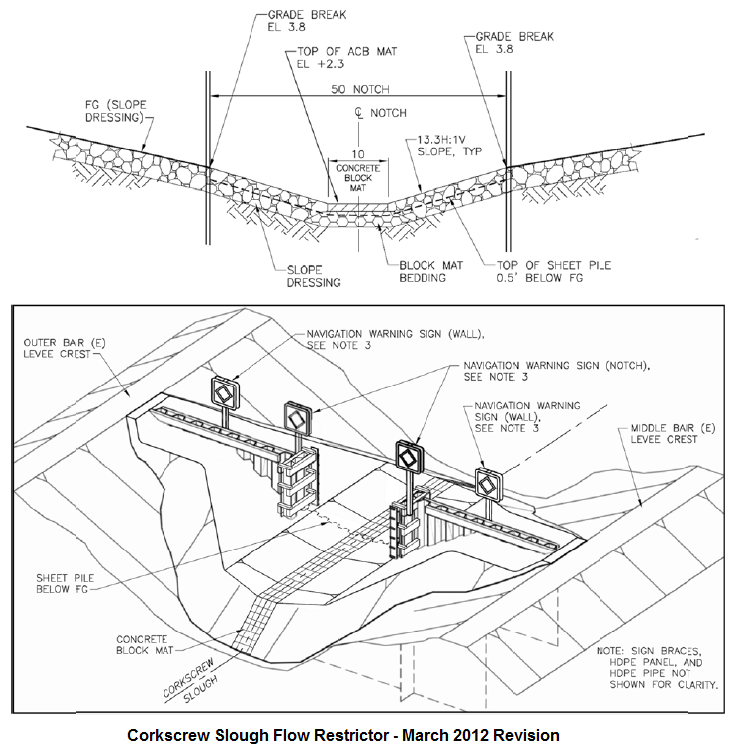
- Hydraulic restrictors in Bair Island: https://www.gobair.com/GoBair-Mirror/news/BairIslandReflow.html
“Two “Flow Restrictors” have been built – one halfway through Corkscrew Slough (FR1) and the other halfway up Smith Slough (FR2) – to prevent additional tidal flow and silting into Redwood Creek and the Port of Redwood City (saving million$ in dredging fees). These micro dams encourage more tidal flow into Bair Island from Steinberger Slough to the north and should scourge out a deeper channel there as more water flows in and out each day. These structures will still allow aquatic access through Corkscrew and Smith at current tide levels (5′ and 2′ respectively).”

We watched the bulk carrier ship ‘Sheila Ann’ as she was escorted by tugs into Port of Redwood City on August 6th. It was surprising how fast a ship that size could slip into port from the middle of the bay.
- Redwood City has been a major port in San Francisco Bay since the mid-1800s. That adds up to over 170 years of opportunity for hull-fouling organisms and other ballast water invaders to find new homes here. (Several of these invaders are discussed below.)
- Port of Redwood City: https://www.redwoodcityport.com/
“In 1851 loggers discovered a waterway that transported the long redwood timber down to San Francisco Bay much more quickly than trekking them over land, down the mountain and through the forest by wagon. Thus, Redwood Creek emerged as a thriving business corridor, and with it, sprouted the Port of Redwood City, positioned perfectly on the channel where the creek meets the Bay.”

Altogether, the inner, middle, and outer Islands of the Bair complex comprise a little over 2,600 acres of restored wetlands. From what we could see on the surface, shorebirds like Willits and Avocets like this place.

Harbor Seals lounged on the banks of Corkscrew Slough as we passed by in both July and August.
2. Bair Island Fishes.

Shiner Surfperch, a.k.a. Shiner Perch. So far, all Shiners have been caught either in Redwood Creek or at stations Cork1 and SMS1 that are closest to the deep creek.

Anchovies range a little more widely here. Some Anchovies were found farther inshore at Cork4, and at Outer and Middle Bair stations. Most were egg-bearing females.
- Female Anchovies are using Bair Island sloughs as yet another summertime refueling zone, much as they do in Lower South Bay!

Baby Brown Rockfish! Three Brown Rockfish babies were netted in July and August. The upper and middle parts of San Francisco Bay are a nursery for young Rockfish.

Fish diversity at station Cork1 on 6 August: Halibut, Shiner Perch, Yellowfin Gobies, and Chameleon Goby. – plus two decorator crabs.

Cheekspot Gobies at station Red1 on 11 July
Cheekspot Goby explosion in Redwood Creek. We counted over 500 Cheekspots at stations Red1 and Red2 in July. (The number dropped to just under 100 at the same stations in August.) Interestingly, we documented a similar July Cheekspot explosion in LSB.

Cheekspot and Arrow gobies are tiny. Adults of both species rarely exceed 2 inches (50 mm) in length. They can be difficult to tell apart. Cheekspots are named for the iridescent blue-black spot on the operculum (the cheek). However, the spot is often hard to see.
Pro-tips:
- Cheekspots have a blunt snout and small mouth. The corner of the mouth (maxilla) does NOT extend past the eye.
- Arrows have a slightly more pointed snout and big mouth. The corner of the maxilla extends past the eye.
- Cheekspots perch on hard substrate. They have a slight arch in their backbone. Plus, the Cheekspot stomach is less elongated.
- Arrows are built for burrowing in soft mud. Their bodies are straighter and more snake-like with a longer stomach.

Chameleon Gobies, a.k.a. Akaobi or ‘Red-Band Goby’ (in Japanese). To the uninitiated, these gobies seem to be tricksters! They change their colors at will!
- Males turn very dark, almost black, when defending their mating burrows and clutches of fertilized eggs. Bright yellow or orange epaulets at the base of their pectoral fins attract females and ward off male competitors.
- Female and young Chameleons tend to adopt the lighter ‘watermelon’ color scheme – light tan body color with dark longitudinal stripes.
- They are not trying to trick you! The color displays their emotions. – Learn to read this goby. Be the goby!

Other interesting fishes caught at Bair Island in July and August.
Bair Island fish totals seem small, but it’s not a fair comparison.
- Bair Island monitoring covers only 10 to 11 stations using 5-minute trawls. In contrast, the Lower South Bay monitoring effort covers 20 stations using 10-minute trawls.
- If you quadruple Bair Island monthly results to normalize Catch Per Unit Effort (CPUE), fish catches for several species, like Halibut and Cheekspot Gobies at Bair exceed those of LSB.
3. Bair Island Crabs.

Tuberculate Pear Crab, a.k.a. Decorator Crab, Fire Crab, Spider Crab, Pyromaia tuberculata.
Salinity at Bair Island was consistently high during these summer months. As a result, crab catches included 15 Decorator Crabs (a.k.a. Pear Crabs) in July and eight more in August.
- We call them “Decorators” because of their habit of decorating themselves with living organisms. – One individual shown above decorated himself with Red Beard Sponge.
- Tuberculate Pear Crab. https://www.inaturalist.org/taxa/165487-Pyromaia-tuberculata
Pyromaia tuberculata, also known as the fire crab, … [It] is native to the pacific coast of North America from San Francisco Bay to Panama, but has spread to coastal waters of Argentina, Australia, Brazil, Japan, and New Zealand.

Decorator Crab at station Red2 on 6 August.
4. New Creatures!

Hilgendorf’s Seaspider, a.k.a. Ammothea hilgendorfi. At first, we thought these tiny gangly creatures were baby Pear Crabs. It quickly became evident that these were an entirely different kind of animal.
- Seaspiders!!! I did not know such creatures existed.
- A. hilgendorfi is a native species. We have seaspiders here!

Caprella, a.k.a. Skeleton Shrimp.
- Caprella per Wikipedia.https://en.wikipedia.org/wiki/Caprella
“Caprella is a large genus of skeleton shrimps belonging to the subfamily Caprellinae of the family Caprellidae. It includes approximately 170 species.- Caprellids are typically preyed upon by surf perch, shrimp, nudibranchs … and brooding anemones … Caprellids are not normally considered a main source of food for fish, but when shiner perch (Cymatogaster aggregata) migrate into the eelgrass beds for reproduction, they target caprellids.
- … After mating, the female in some species have been known to kill the males by injecting venom from a claw within their gnathopod.”

Unknown Isopod. We found these tiny oblong stick-like critters at several stations. From naked eye observation we couldn’t tell if these were insects, isopods, or amphipods.

We later determined from photos that these bugs are Isopods, probably from the Mesanthura genus. Species ID remains unknown.

We had a similarly confusing experience with clams. We easily recognize Corbula, Gema, and Macoma clams. But, here in a saltier part of the Bay, we are confronted with new varieties.
- Sami feels confident that at least one clam in August was a young Mya arenaria.
- Six others, all tiny babies, collected in both July and August seem to best match descriptions of “Gaper / Horse Clams” (Tresus capax.)
- Horse Clams / Gaper Clams per iNaturist: https://www.inaturalist.org/taxa/117624-Tresus
- Horse Clams per Washington DFW: https://wdfw.wa.gov/species-habitats/species/tresus-capax
- Per Wikipedia: https://en.wikipedia.org/wiki/Tresus_capax
5. Water Colors.

Why is water so green here? Water is much greener at Bair Island compared to our familiar territory in Lower South Bay (LSB). Even one day after Full Moon on 11 July, water colors at various stations teetered between Mélange Green to Luau Green. We generally see much browner water in LSB during Spring Tides.
Greener water means clearer water. We measured greater Secchi depths here as well. So, the real question is why is Bair Island water so clear? Some possible reasons, listed in order of likely magnitude …
- Range of tides: Bair Island is roughly 10 miles closer to the ocean compared to LSB. The lower lobe of San Francisco Bay is very shallow and acts as a long and narrow funnel for tidal energy. The range of tide at the Golden Gate at the mouth of SF Bay is close to 2 feet. The max range of tides in LSB is close to 8 feet. Bair Island tides are somewhere in the middle – which means less tidal energy and velocity – less sediment resuspension.
- Geography: A USGS report from a few years ago documented a flow of fine sediment particles from the Delta along the east shore of the Bay all the way down to LSB (a “long shore current”). Bair Island, lying on the west side, is less exposed to those fine sediments.
- Biologics: Bair Island has more filter-feeding sponges and tunicates. (We will discuss these below.) Most of these organisms do not survive in the variable salinity in LSB.
— Plus, the ponds of middle and inner Bair support massive numbers of slimy Philine Snails and Japanese Bubble Snails. Creature slime is similar to synthetic polymer that human professionals use to ‘flocculate’ turbid water.- Sami first alerted us to this ‘slimy organism’ phenomenon. He noticed that several Bat Rays dramatically clarified water in a tub when we were processing a catch in the Petaluma region in July.
- Google AI supports this hypothesis: “Flocculant polymers are large molecules (polymers) used to cause suspended particles in a liquid to clump together, forming larger, heavier masses called flocs that settle out more easily. This process, known as flocculation, is widely used in water and wastewater treatment, mineral processing, and other industries to separate solids from liquids.”
- Can creature slime alone visibly clarify turbid water? This is cutting-edge biological science!
6. Philine / Tortellini Snails.

Philine auriformis, a.k.a. Tortellini Snail or New Zealand Sea-Slug. Philine slugs are present at nearly all stations. They are most numerous at stations Red, and in the Middle and Outer Bair ponds (MBP1 and OBP1).
- Nemesis, Marine Invasions Lab. https://invasions.si.edu/nemesis/species_summary/568082
“Philine auriformis is a cephalaspidean or bubble snail, commonly known as the Tortellini Snail or the New Zealand Sea-Slug. It is native to New Zealand …” - Per Wikipedia: https://en.wikipedia.org/wiki/Philine_auriformis “Philine auriformis is a species of sea snail, a marine opisthobranch gastropod mollusk in the family Philinidae, the headshield slugs. Philine auriformis (commonly known as the New Zealand sea slug) eats small clams and worms.

We often see Philine Slugs in Lower South Bay, but never so many of them. In fact, Philine have been largely absent in LSB over the past year or two. Philine are flourishing here at Bair Island!

Philine are best described with one word: Slimy! They are major slime producers. Copious slime from large numbers of them in the holding tub starts to suffocate fishes in short time, so we count and release fishes first.
- Philine slime must have some impact on slough and pond bottom ecology! Imagine hundreds to thousands of tortellini-sized slugs leaving daily slime-trails across your front yard or patio. GROSS!!!

Interesting observation: With slimy Philine on our minds, we encountered a particularly nasty form of sulfurous black tarry soil at station OBP1. We are familiar with Sulfur-Reducing Bacteria and associated anaerobic black soils, but this stuff was different: blacker and stickier. It seemed to have some relationship with abundant Philine poop and slime, but this was the only place with soil like that despite the presence of Philine almost everywhere. More investigation is needed!
7. More New Creatures.

Worms brought us more mysteries. In some places along Steinberger Slough, the dense brown mud was riddled with tiny red worms. Who are these worms? How do you record them on a data sheet if you don’t know the name?
- They are red and tiny … So, maybe they are Heteromastus filiformis???
- Nemesis, Marine Invasions Lab. https://invasions.si.edu/nemesis/species_summary/67420
“Heteromastus filiformis belongs to the Capitellidae family, a group of earthworm-like burrowing polychaetes. Populations are known from many regions around the world, spanning from Arctic to tropical waters. High variation in the environmental conditions where populations are noted suggests that H. filiformis is likely a complex of cryptic species. … Heteromastus filiformis was first collected on the West Coast in San Francisco Bay, California (CA) in 1936 (Hartman 1947). It occurs at high densities in the central, South, and San Pablo Bays, and inland as far as Pittsburg, Suisun and Grizzly Bay …”

Spaghetti Worms. These worms are easy to identify as terebellids from their mouth full of spaghetti-like tentacles. But, Terebellidae is a big family.
- Per Wikipedia. “The Terebellidae is a marine family of Polychaete worms. … The roughly 400 known species are divided between many dozens of genera. Most of these are assigned to 4 subfamilies.”

Good News: Red and green algae are relatively abundant at almost all stations.

Bad News: Japanese Bubble snails use the red algae, particularly Gracilaria, as attachment matrix for their snot-like jelly egg sacs.
- From Google AI: Snail egg sacs, or egg casings, are protective structures that snails use to lay and develop their eggs. These sacs vary in appearance and composition depending on the snail species. Some, like those of moon snails, are made of sand and mucus, forming a collar-like structure. Others, like those of mystery snails, are bright pink or red clusters above the waterline.

Inner Bair Island was breached to introduce tidal flows in 2015. The sedimentation rate is slow here, consequently part of Inner Bair remains open water. Tide was high enough to accommodate trawling the shallow pond in August.
- Results: The majority of the trawl catch was a gloppy mass of filamentous red and green algae with some Ulva. Fine hair-like Ceramium red algae made up the bulk of the mass. We used our fingers to sift out slimy Philine, Japanese Bubble Snails with their snotty egg sacs, and Musculista. Surprisingly, some fish were present: almost a dozen gobies, two pipefish, and a Bat Ray.
- The algal mass was the big surprise. Ceramium was wildly proliferating in the warm, shallow waters at IBI1.

We picked up small chunks of conglomerate material that defied easy description in the main channels of Steinberger Slough. Encrusting Bryozoan and bright orange colonial tunicates coated fragments of yellow and red sponges.
Red Beard Sponge, Clathria prolifera. (looks red-orange in the photo)
- Per Wikipedia: “Clathria prolifera, commonly known as red beard sponge, is a species of sea sponge in the family Microciondae. It is native to shallow water habitats in the western Atlantic Ocean from Prince Edward Island southwards to Florida and Mexico, and possibly Brazil. In the twentieth century it also became established on the west coast of the United States.”
Colonial ascidian tunicate, Botrylloides violaceus. (looks bright orange in the photo)
- Per Wikipedia: “Botrylloides violaceus is a colonial ascidian. It is commonly known as the chain tunicate, but has also been called several other common names, including: lined colonial tunicate, orange sheath tunicate, orange tunicate, and violet tunicate. Its native range is in the northwest Pacific from southern China to Japan and Siberia. … In the San Francisco Bay area, B. violaceus can be readily found on boat docks in the Richmond Marina.” https://en.wikipedia.org/wiki/Botrylloides_violaceus
- Botrylloides tunicates are the ultimate invaders. They cannot be eradicated! Colonial ascidian blood contains stem cells from which the entire organism can regenerate itself!
- Brown et al. (2009) Whole body regeneration in a colonial ascidian, Botrylloides violaceus https://onlinelibrary.wiley.com/doi/10.1002/jez.b.21303
“We propose that multiple stem cell types are circulating within B. violaceus and that they undergo proliferation in the peripheral vasculature before differentiating into epithelial tissues for all three germ layers during WBR [Whole Body Regeneration].”
- Science officer Ash to Ripley and crew (movie ‘Alien’): “You still don’t understand what you’re dealing with, do you? Perfect organism. It’s structural perfection is matched only by its [ability to regenerate]. … I can’t lie to you about your chances, but … you have my sympathies.” https://www.youtube.com/watch?v=cS3612EIcF4
- Brown et al. (2009) Whole body regeneration in a colonial ascidian, Botrylloides violaceus https://onlinelibrary.wiley.com/doi/10.1002/jez.b.21303

Encrusting Bryozoan, a.k.a Cryptosula pallasiana and/or Schizoporella errata.
Truth be told, there are multiple species of encrusting bryozoan in San Francisco Bay. C. pallasiana is the most widely reported variety here. HOWEVER, Schizoporella errata is known to grow into big chunky rocks called ‘bryoliths.” (I suspect we often see flaky C. pallasiana colonies growing over the surface of S. errata chunks. More investigation is needed!)
- The Exotics Guide. https://www.exoticsguide.org/cryptosula_pallasiana
“In San Francisco Bay [C. pallasiana] occurs from the mouth of the bay north to San Rafael and Point San Pablo and south to Redwood Creek and San Leandro.” - Zabin et al. (2010) A non-native bryozoan creates novel substrate on the mudflats in San Francisco Bay. https://www.int-res.com/abstracts/meps/v412/meps08664
“A non-native bryozoan, Schizoporella errata, forms extensive patches of free-living balls and reef-like structures (bryoliths) on the mudflats in south San Francisco Bay, California. The ball-like bryoliths range from 2 to 20 cm in diameter, and the reef-like structures can be nearly 1 m across. … The bryoliths may thus facilitate colonization by invaders on the mudflats and serve as stepping stones between the limited hard substrate habitats in the Bay.

Botrylloides violaceus colors and appearance can vary, but as far as we know at this point, we may be finding multiple species of colonial tunicates here.
- Attention Tunicate and Bryozoan experts! Feel free to message or email us the identity of these species.

Yellow Sun Sponge, a.k.a., Crumb of Bread Sponge, Halichondria bowerbanki. This sponge is also native to the North Atlantic. It is a common dock fouling organism here.
- Nemesis, Marine Invasions Lab. https://invasions.si.edu/nemesis/species_summary/48398
“It was first found in San Francisco Bay in the 1950’s, and was probably introduced with Eastern Oysters, or hull fouling. This sponge occurs on rocks, pilings, and seaweeds.”
“Sea Grape” Tunicates, a.k.a., Molgula manhattensis. These grape-sized tunicates reproduce by budding. As a result, they are often found in tight clusters of dozens of (technically solitary) individuals.
- Nemesis, Marine Invasions Lab. https://invasions.si.edu/nemesis/species_summary/159557
“Molgula manhattensis, also known as the Sea Grape, is a solitary tunicate with a round, globular body shape. It is native to the East and Gulf Coasts of he United States and has been introduced to Europe, Japan, Australia, Argentina, and the West Coast of North America. - In Lower South Bay, Mogula manhattensis is the ONLY type of tunicate we ever see. From that, we surmise that the colonial forms we find at Bair Island cannot tolerate low and variable salinity.

In summary, It’s a sessile organism-eat-sessile organism world at the bottom of the main creeks around Bair Island. The various non-native sponges, tunicates, and bryozoans appear to be locked in a perpetual slow-motion war for dominance over each other.
- From limited sampling in July and August, it looks like there may be a gradient from Outer Bair Island (Steinberger Slough, station Ste3) to Inner Bair Island (Smith Slough, station SMS1).
- Sponges, encrusting bryozoan, and colonial tunicates dominate closer to the bay near Outer Bair.
- Solitary tunicates (Sea Grapes), mossy bryozoan, and Ceramium red algae rule the bottom in Smith Slough and the open water parts of Inner Bair Island.
- Investigation continues.
The Rolling Stones. 2000 Light Years From Home https://www.youtube.com/watch?v=y8ul4lwQ0p8&list=RDy8ul4lwQ0p8&start_radio=1
 Previous Post
 Next Post